
About Us
One - stop Printed circuit board assembly Solution provider Keep Best PCB Assembly Co., Ltd serves many well-known brand customers in industrial control, security, medical, Internet of Things, automotive, artificial intelligence, smart home, power and communications industries at home and abroad. The company continues to be customer-centric, improves the level of digital intelligence, and is committed to meeting continued high-quality customer needs.
Get a free quote

PCB RFQ Checklist for Thailand Assembly Projects
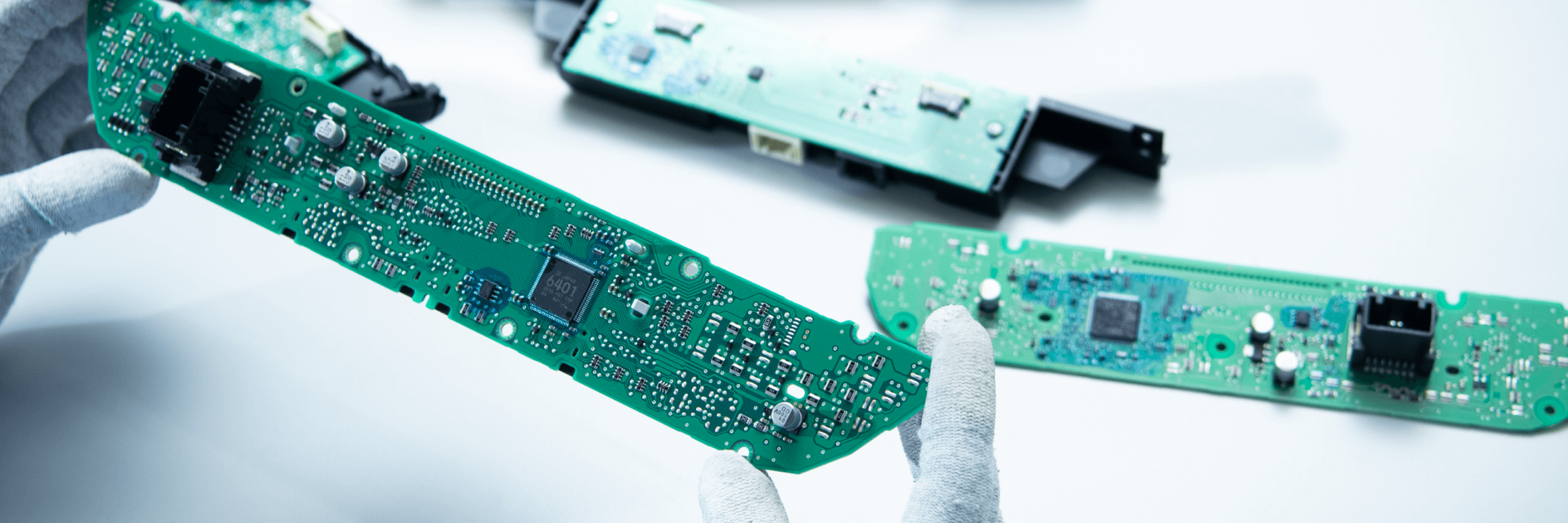
Assembly illustration; confirm the executing site and accepted scope for your project.
-

KeepBestPcba
-
Published
Updated
-
Views ()
PCB RFQ Checklist for Thailand Assembly Projects
Prepare a bare PCB RFQ with fabrication files, stackup, materials, surface finish, impedance and acceptance requirements for your assembly project.
A bare PCB RFQ for a Thailand assembly project needs a controlled fabrication package, an explicit board specification and a defined handover to the assembler. State the material, stackup, copper, holes, finish, tolerances, quantity and acceptance requirements. Confirm which fabrication supplier is responsible and how the accepted boards reach the assembly site.
This checklist covers bare-board supply. It complements the PCBA RFQ checklist, which also covers components, placement, assembly and testing. Do not assume that an assembly quotation fixes the bare-board construction or that a Thailand PCBA project uses a Thailand-owned fabrication plant.
Send one identifiable fabrication release
- Gerber or another fabrication format accepted by the proposed supplier, with the layer identities and drill information.
- A board outline and revision-controlled fabrication drawing, including dimensions and units.
- The stackup, material requirements, copper definitions and controlled-impedance requirements.
- Finish, solder mask, markings, special holes or via treatment and any process restrictions.
- Quantity, panel requirements, acceptance checks, required records and the destination for the boards.
Identify open requirements rather than letting a missing note become a supplier assumption. Remove superseded exports from the active release folder. A drawing and a data export with the same filename can still describe different revisions; record the release identifier and approval status.
Check the specification line by line
| Object | What to specify | Question to close |
|---|---|---|
| Outline and thickness | Finished dimensions in mm or explicitly stated units, thickness and relevant tolerances. | Do the drawing, fabrication data and mechanical requirements agree? |
| Material and stackup | Laminate grade or approved material requirements, layer order and dielectric thickness definitions. | Who approves the supplier’s proposed construction or alternative? |
| Copper | Stated thickness in µm or a defined oz/ft² convention, with starting/finished assumptions clarified. | Does the electrical design use the same copper definition as the fabrication quote? |
| Holes and vias | Finished diameter, plated/non-plated status, tolerances, layer pairs and fill/cap needs where applicable. | Is the proposed drill and lamination route approved for the construction? |
| Impedance | Target in Ω, tolerance, geometry, reference layers and required verification records. | Which stackup and material assumptions support the target? |
| Surface finish | Named finish, acceptance specification and any assembly/storage constraints. | Is the finish compatible with the intended assembly and handling conditions? |
| Acceptance | Required electrical, dimensional or other inspections, sampling/frequency and documentation. | Who approves a discrepancy or releases the boards to assembly? |
Use fabrication capability review to confirm the combined conditions with the responsible supplier. A list of isolated minimum values is insufficient when material, thickness, via structure and tolerances interact.
Prepare the stackup before relying on routing assumptions
Use the PCB stackup specification checklist to identify layer order, dielectric and copper definitions, reference planes and impedance requirements. Then obtain supplier confirmation of the proposed stackup. Customer requirements and the supplier’s confirmation serve different purposes and should reference the same approved revision.
Consider material selection, blind and buried via construction and surface-finish selection where they affect the design. Record proposed substitutions for approval rather than allowing a general material family to imply interchangeability.
Define the interface to Thailand assembly
The assembler needs to review panel dimensions, support, fiducials, tooling, separation method, finish and relevant handling requirements. Ask who supplies the panel drawing and who approves changes. The released board and placement data must use compatible origins, variants and board-side definitions.
Agree the delivery destination, packaging, lot identification and incoming checks. Define how a board discrepancy is contained and resolved before components are fitted. Connect those records to the assembly release and the product acceptance plan.
State the supply route and quotation assumptions
The PCB supply scope should identify the fabrication site or partner, the buyer, the approval owner and the handover to assembly. Delivery timing depends on specification closure, supplier confirmation, setup, production, inspection and transport; a requested date should not conceal those dependencies.
Ask quotations to identify the revision, quantity, setup charges, special construction, acceptance records, packaging and delivery responsibilities. Compare equivalent specifications before evaluating price. Use the quotation comparison guide and manufacturing and shipping records to resolve scope and document responsibilities.
Use the accepted data format, with accompanying requirements
Ucamco’s Gerber Job documentation describes fabrication information accompanying Gerber image data. Confirm whether your proposed fabricator accepts this format and how it receives the drawing, stackup and special acceptance notes. Exporting images does not remove the need to approve the complete board specification. Ucamco: Gerber Job.
A manufacturing-data review should identify conflicting or incomplete inputs before material and tooling commitments. Use DFM and DFMA review to connect fabrication questions to assembly requirements, and retain the approved responses in the release record.
Start the supply discussion
Share the current drawing, fabrication data, intended quantity and assembly destination. Identify specifications still being decided and whether you need PCB supply alone or part of an EMS project. Discuss PCB supply for your Thailand assembly project; the team can clarify the next required inputs before a release-ready quotation is prepared.
Recent Post


Ask a PCBA question
Your question is sent privately to our team. Required fields are marked *.